How to Become a Wellness Coach After 40: Step-by-Step Guide for Midlife Career Changers
Key Takeaways: Your life and professional experience after 40 are valuable assets that can uniquely position you for success as a wellness coach.

Key Takeaways:
- Your life and professional experience after 40 are valuable assets that can uniquely position you for success as a wellness coach.
Choosing an accredited, hands-on certification program (ICF and NBHWC) is essential for credibility, skill development, and professional opportunities.
You can transition into wellness coaching at your own pace, building skills and a client base while maintaining your current career, with support from mentorship and a vibrant community.
I can tell you from experience that life changes after 40 - in so many positive ways! After a decade in a career that looks successful on paper, many people over 40 quietly ask if something more meaningful is possible. We become more aware that we have a good portion of our days behind us and realize that there is no time to waste. If your heart pushes you to take up skiing your knees may have something to say. But in wellness coaching, your experience is not a setback; it is your foundation.
Becoming a wellness coach after 40 is more straightforward than you might expect. It means pairing your background with accredited training, hands-on practice, and a clear path from certification to your first clients. Explore the Gaja Coach Certification to see how a recognized program can help you move forward with confidence.

A Step-by-Step Path to Becoming a Wellness Coach After 40
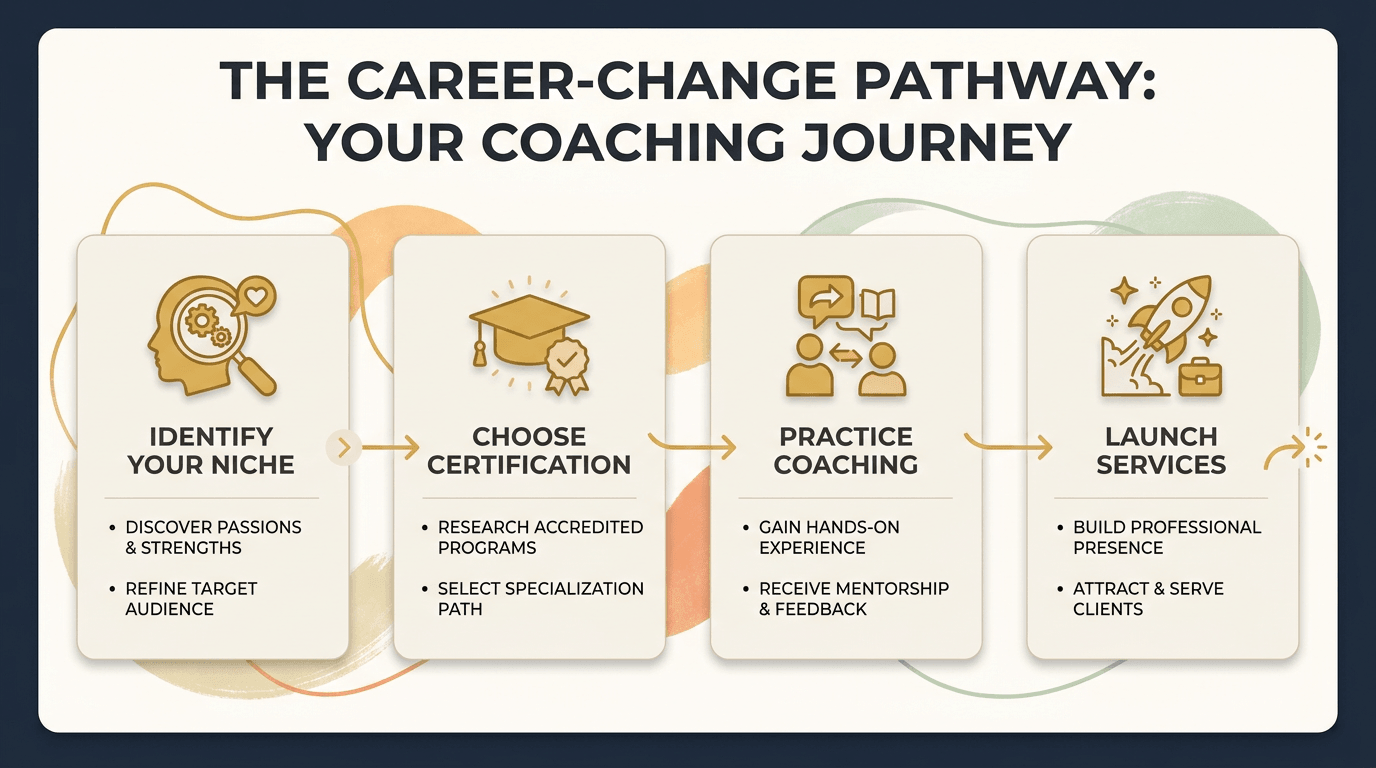
Many people ask how to become a wellness coach after 40 with no prior coaching experience. The answer is more achievable than it might feel right now: start with clarity, choose credible training, and practice before you feel ready.
Step 1: Define Your Wellness Coaching Focus
Trying to help everyone is a common starting point, but it often leads to feeling scattered. Think about the problems you've personally worked through or the questions people already come to you with. Whether that's stress resilience, habit change, or mind-body-spirit well-being, a clear focus helps you attract the right clients and build confidence faster.
Step 2: Build Your Wellness Coaching Career in Stages
You don't need to quit your job on day one. Start by assessing your strengths, whether that's your communication style, professional background, or lived experience. Then attend a live program preview to evaluate fit and enroll in accredited training. The Gaja Coach Certification's program curriculum spans 21 weeks, designed to fit around a full-time schedule. That gives you time to work with real clients and build an entry-level offer before making the full leap.
Step 3: Get Coaching Experience Before You Feel Ready
Waiting until you feel fully prepared can keep you stuck for years. Supervised practice, peer feedback, and mentor coaching are what actually build skill. The ICF's updated core competencies highlight listening, questioning, and accountability as skills developed through hands-on work, not just study. In fact, NBHWC board certification requires 50 supervised sessions, meaning real client hours are built into the credentialing path.
What Certification Do You Need to Become a Wellness Coach After 40?
Choosing the right certification after 40 comes down to one question: will this credential hold up in the professional world? Two benchmarks worth knowing are International Coaching Federation (ICF) accreditation and approval from the National Board for Health and Wellness Coaching (NBHWC). NBHWC publishes program approval standards that cover live instruction, supervised practice, and faculty credentialing, the features that separate a career-building program from a basic online certificate.
Feature | What It Means | Why It Matters |
|---|---|---|
ICF Accreditation | Accredited by the International Coaching Federation | Signals to clients and employers that your training meets a globally recognized standard |
NBHWC Approval | Approved by the National Board for Health and Wellness Coaching | Opens the path to the NBC-HWC credential, a mark of professional competency respected across the health and wellness field |
Live, Synchronous Training | Real-time instruction, not just pre-recorded video | Develops real coaching skills through interaction, not passive viewing, and is a requirement of NBHWC-approved programs |
Supervised Practice with Feedback | Observed coaching sessions with scored, structured feedback | Prepares you for the practical skills assessment required for board exam eligibility |
Qualified Faculty | Instructors with coaching credentials and professional experience | Ensures you learn from practitioners with real-world coaching experience, not just academic theory |
Holistic Curriculum | Covers health, mindset, behavior change, and mind-body-spirit approaches | Equips you to integrate yoga, meditation, and behavior change tools into a single, cohesive coaching practice |
One detail worth noting for midlife career changers: NBHWC's board certification accepts 4,000 hours of work experience as an alternative to a degree requirement, which means your professional background counts toward eligibility. You'll also need to log 50 documented coaching sessions after completing your program before you can sit for the board exam. Supervised practice built into your training can count toward that requirement.
How Your Life Experience Can Help You Become a Wellness Coach After 40
One of the most common questions people ask is how their life experience can help them become a wellness coach after 40, and the short answer is that it may be your greatest professional asset.
The years you've spent in work, caregiving, or personal healing don't disappear when you change careers, and research on aging and emotion regulation suggests they may actually make you better at the parts of coaching that matter most.
Deep listening comes naturally when you've spent years in real conversations, not just classrooms.
Older adults often show a natural tendency to focus on what's working rather than what isn't, which builds a grounded presence.
Lived experience with health challenges, loss, or reinvention builds empathy that clients can actually feel.
Years in career and caregiving teach you when to listen and when to step back.
Your role as a coach is to ask the right questions, not give all the answers.
The difference between sharing your story and coaching someone is turning what you've lived through into questions and accountability. The Gaja Coach Certification is built for people with real-world background, and the Gaja graduate directory shows what that path can look like.
FAQ: Starting a Wellness Coaching Career Later in Life
When you're considering a career shift in your 40s or 50s, the questions that tend to surface are less about passion and more about practicality: credentials, timing, and whether your background actually qualifies you. Getting clear on these points can help you move forward with real confidence.
Can you start a wellness coaching career later in life and still succeed?
Starting a wellness coaching career later in life is not only possible, it's often a genuine advantage. Coaching effectiveness research shows measurable improvements in client behavior, self-efficacy, and health outcomes. Clients often gravitate toward coaches who bring patience, perspective, and emotional steadiness, qualities that tend to deepen with age rather than diminish.
What if my background is in marketing, education, or another field entirely?
Your prior career doesn't disqualify you. It can actually define your niche. Many coaches build practices around industries they already understand, which makes their marketing clearer and their client relationships more natural. A background in corporate marketing, for example, positions you well to serve professionals navigating burnout or career change.
What should I look for in a wellness coaching certification program?
Prioritize programs with ICF accreditation and NBHWC approval. Both bodies require live mentorship, supervised practice hours, and a formal Practical Skills Assessment, a hands-on evaluation of your coaching competency. Pre-recorded content alone won't meet board eligibility requirements or prepare you to coach with skill and credibility.
How long does it take to get certified while working full-time?
It depends on the program structure. Many accredited programs, like the 21-week cohort at Gaja Collective, are designed to work around existing schedules. You can be certified and client-ready within a few months, without leaving your current role, and begin building your practice from there.
Your Next Step Toward a Meaningful Wellness Coaching Career
The right wellness coach certification for midlife career changers doesn't ask you to start over. What you bring to coaching is something no classroom alone can teach.
Choosing a program with both ICF accreditation and NBHWC approval means your credential carries weight with clients and employers from day one. The Gaja Coach Certification is structured around these standards, with live mentorship, applied practice, and a global peer community woven throughout. You can also explore the Total Well-Being Coach path to compare options before committing.
Take a closer look at the Gaja Coach Certification and find out how accredited, mentor-supported training can help you build a coaching practice rooted in real experience.